
Case File · Super Visa
Super Visa Canada: Step-by-Step Application Guide 2026
By Alwin Salgado, Immigration Lawyer – NextArrival Immigration
Category Super Visa | Reading time 7 min | Published July 7, 2026
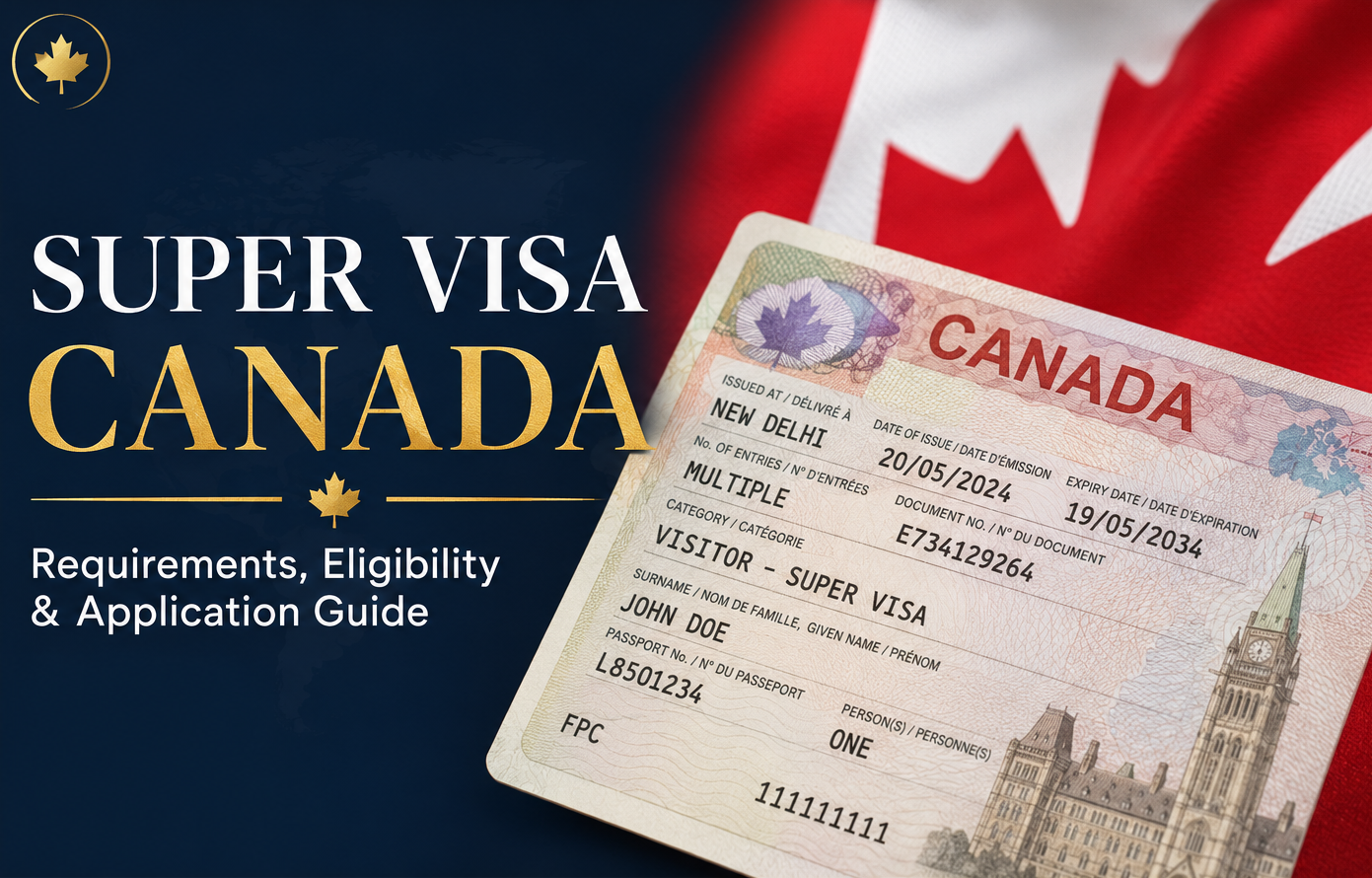
The Super Visa lets parents and grandparents of Canadian citizens and permanent residents visit for extended periods, without the disruption of renewing visitor status every few months. It is not permanent residence, but for families who want to be together while a longer-term family sponsorship plan comes together, it is often the fastest way to make that happen.
This guide walks through eligibility, the documents you need, and the application process step by step.
1. What the Super Visa is (and is not)
The Super Visa is a multiple-entry visitor visa, valid for up to 10 years, that allows parents and grandparents to visit Canada for extended stays rather than the shorter periods given under a standard visitor visa. It is designed specifically to reduce the number of times a family must renew or extend visitor status. See the official IRCC Super Visa page for the current programme requirements.
It is not a pathway to permanent residence. Parent and Grandparent Sponsorship (PGP) — the permanent residence programme for parents and grandparents — is a separate application with its own eligibility criteria, and historically has an annual intake cap, meaning not everyone who wants to apply for PGP can do so in a given year. Many families use the Super Visa specifically to be together while waiting for a future PGP intake, or as a longer-term visiting solution on its own.
2. Who qualifies as a sponsor
To invite a parent or grandparent on a Super Visa, the sponsor in Canada must be:
Canadian Citizen or PR
The sponsor must be a Canadian citizen or permanent resident.
At Least 18 Years Old
The sponsor must meet the minimum age requirement to invite a parent or grandparent.
Meeting the LICO
A minimum income threshold that increases with household size, including the visiting parent or grandparent.
04
Letter of Invitation
Willing to provide a signed letter of invitation confirming financial support during the visit.
The income requirement is often the part families are least prepared for. LICO thresholds are published annually by IRCC and should be confirmed against your specific household size before applying — see the current LICO thresholds.
3. Who qualifies as an applicant
The visiting parent or grandparent must:
Parent or Grandparent
Must be the parent or grandparent of the sponsor (not a sibling, aunt, uncle, or other relative).
Medical Exam
Must pass a medical exam with a designated IRCC physician.
03
Private Medical Insurance
Must purchase insurance from a Canadian insurer meeting IRCC’s minimum coverage requirements.
04
Intent to Leave
Must demonstrate an intention to leave Canada at the end of the authorised stay.
05
Admissibility
Must meet standard visitor visa admissibility requirements, with no serious criminal or medical issues.
4. The medical insurance requirement
This is one of the most commonly misunderstood parts of the process. Super Visa applicants must show proof of private medical insurance that:
Canadian Insurer
Issued by a Canadian insurance company.
One-Year Minimum
Valid for at least one year from the date of entry to Canada.
Minimum Coverage
Meets or exceeds IRCC’s minimum coverage amount.
04
Paid in Full
Proof of full payment is required — a quote or partial payment is not sufficient.
Insurance must be purchased before the visa is issued, and proof of payment (not just a policy document) is required. Because coverage minimums are set by IRCC and can change, confirm the current required amount before purchasing a policy.
5. Step-by-step application process
Once eligibility is confirmed on both sides, the process runs through seven steps:
Step 1
Confirm Sponsor Eligibility
Confirm the sponsoring child or grandchild meets the Low Income Cut-Off for their household size, including the visiting parent or grandparent.
Step 2
Gather Sponsor Documents
Proof of Canadian citizenship or permanent residence, proof of income (Notice of Assessment or equivalent), and a signed letter of invitation.
Step 3
Purchase Medical Insurance
Buy a qualifying policy from a Canadian insurer and keep proof of full payment — this must be submitted with the application.
Step 4
Complete the Medical Exam
Book an appointment with an IRCC-designated panel physician in the applicant’s home country.
Step 5
Submit the Application
Apply online or on paper, including all supporting documents: invitation letter, proof of relationship, proof of income, insurance proof, and medical exam confirmation.
Step 6
Biometrics (If Required)
Applicants may need to provide biometrics (fingerprints and a photo) at a nearby visa application centre.
Step 7
Wait for a Decision
Processing times vary by application volume and visa office. Check IRCC’s published processing times before making travel plans.
6. Common reasons Super Visa applications are refused
- Sponsor income falls below the Low Income Cut-Off for the household size
- Insurance policy does not meet minimum coverage requirements, or proof of full payment is missing
- Insufficient evidence that the applicant intends to leave Canada at the end of their stay
- Incomplete or inconsistent documentation of the parent-child or grandparent-grandchild relationship
- Medical exam results raise admissibility concerns
Most refusals come down to documentation gaps rather than outright ineligibility — which is exactly why a properly prepared application matters.
Ready to bring your parents or grandparents to Canada?
The Super Visa process has more moving pieces than it first appears — sponsor income thresholds, insurance requirements, and documentation all have to line up correctly. Our team at NextArrival Immigration prepares Super Visa applications from start to finish, from our Scarborough office and Moncton.
Toronto: (647) 558-4312 Moncton: (506) 405-1312 Toll-free: +1 888 661 8810
Frequently Asked Questions
What is a Canada Super Visa?
The Super Visa is a long-stay, multiple-entry visitor visa for parents and grandparents of Canadian citizens and permanent residents. It allows extended visits to Canada without needing to renew visitor status every few months, and is valid for up to 10 years, subject to the applicant’s passport validity.
How long can I stay in Canada on a Super Visa?
Current rules allow Super Visa holders to stay for extended periods per entry, with the option to apply to extend a stay further from within Canada. Exact maximum stay periods are set by IRCC and should be confirmed at the time of application, as these terms have changed in past years.
What income do I need to sponsor a Super Visa applicant?
The inviting child or grandchild in Canada must meet the Low Income Cut-Off (LICO), a minimum income threshold set annually by IRCC based on household size. The threshold increases with the number of people in the household, including the visiting parent or grandparent.
What insurance is required for a Super Visa?
Applicants need private medical insurance from a Canadian insurance company, valid for at least one year from the date of entry, with a minimum coverage amount set by IRCC. Proof of payment for the full insurance policy is required at the time of application.
Is the Super Visa the same as permanent residence sponsorship?
No. The Super Visa is a temporary visitor visa, not a pathway to permanent residence. Parent and Grandparent Sponsorship (PGP) is the separate programme for permanent residence, and typically has an intake cap and longer processing times. Many families use the Super Visa while waiting for a future PGP intake.
This article is for general information only and does not constitute legal advice. Income thresholds, insurance minimums, and stay periods are set by IRCC and change periodically. For advice specific to your situation, consult a licensed immigration lawyer.